


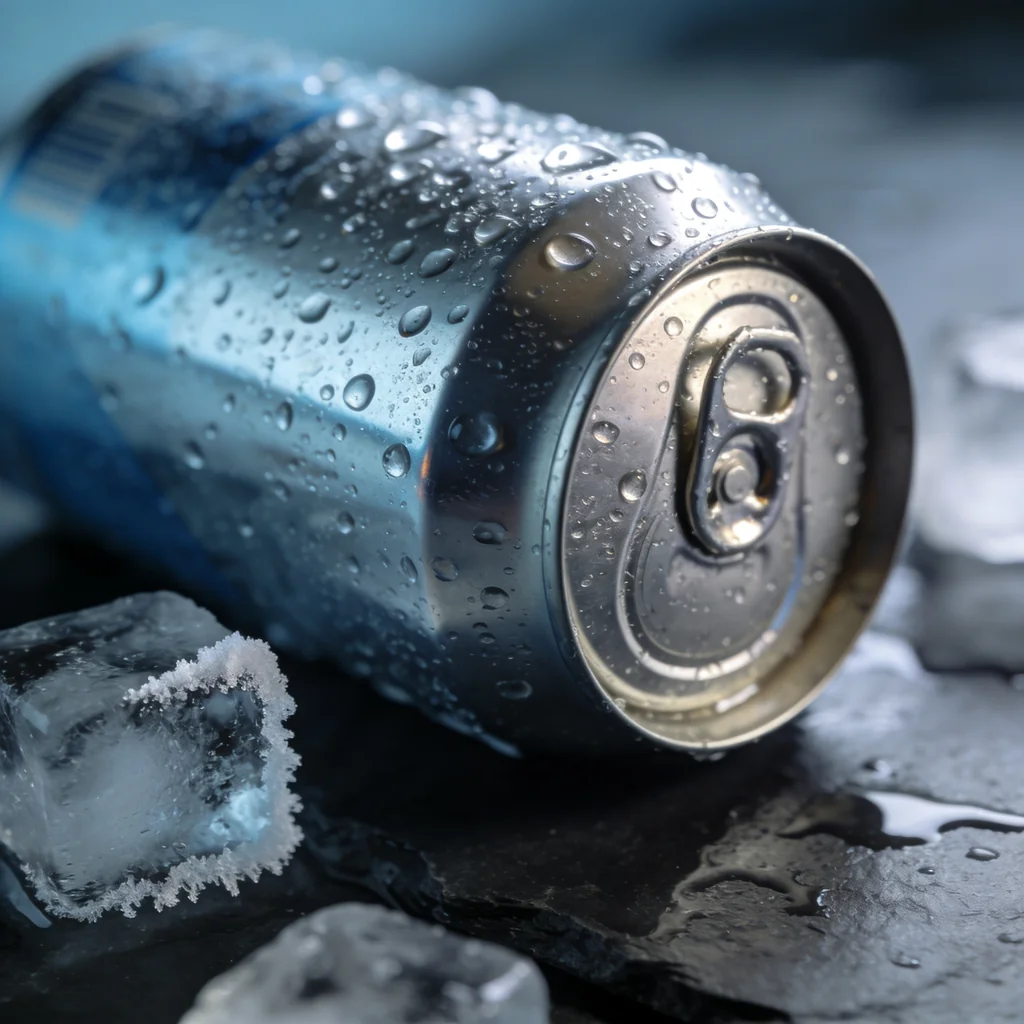
Cold-can photography is sold on cues: condensation, wet metal, ice, reflected light, and a clean contact with the surface. AI can generate those cues convincingly. The harder question is whether the pictured beverage is still the product you sell.
This test sent one fictional can brief through SeedDream 4.5, FLUX.2 Pro, Nano Banana 2, and GPT Image 2. The four original outputs below are useful evidence about one visual task. No real SKU, label, ingredient panel, or reference pack was supplied.
Evidence boundary: this is one prompt and one displayed output per model. The can is fictional, no packaging reference was provided, and the images were not compared with a physical product or tested for temperature, freshness, ingredients, safety, or repeated reliability. The observations describe visible pixels—not liquid-physics pass rates.
Quick answer
- Best displayed hero: Seedream 4.5 made the most dynamic macro in this run.
- Clearest material study: FLUX.2 Pro made a clean upright can with readable metal and ice.
- What all four prove: each route made one plausible cold-beverage concept.
- What none prove: preservation of a real can, label, recipe, claim, color standard, or serving condition.
- Safer listing workflow: generate the wet set and lighting, then composite the approved packshot.
If you are choosing a route for a real catalog rather than judging this one beverage brief, use the 30-category product-photography model comparison to shortlist models by label, geometry, material, and color risk before testing your approved SKU.
The controlled brief
The original post summarized the prompt. A reproducible version matching the displayed test is:
Fictional brand-free slim silver aluminum beverage can, cold and covered with fresh condensation, surrounded by a few clear ice cubes on wet dark slate, cool studio light from camera-left, readable brushed-metal surface, natural droplets and run-off, coherent reflections and contact shadow, premium square product photograph. No text, logos, badges, ingredients, fruit, people, straws, extra cans, or watermarks.
This text-only brief can evaluate visual treatment. Because it contains no real product source, every can is an invention.
Four first-hand outputs
Seedream 4.5 chose a dramatic side-lying macro. Droplet sizes vary, some water gathers along the lower edge, and the can and ice separate from the slate. The pull tab and rim deserve close inspection, and the orientation is a creative interpretation rather than a fixed requirement. This is a strong concept, not an approved pack image.
FLUX.2 Pro made the most restrained upright study. The bright and dark bands help the can read as metal, and the ice contains bubbles and refraction cues. Those are visible qualities in this output; they do not confirm the alloy, coating, chill level, or behavior of a real package.
Nano Banana 2 returned a conventional centered product composition. The condensation reads at article scale and the ice supports the cold cue without dominating. “Balanced” is an art-direction judgment about this candidate, not a reliability claim or a recommendation to skip source review.
GPT Image 2 pushed the scene toward a cooler blue grade and used crushed ice around the base. The can remains readable, but color grading can alter perceived packaging color. For a real SKU, compare the body, print, cap, liquid, and approved color target under a controlled review—not by visual memory.
What the comparison actually supports
| Question | What these four images show | What remains untested |
|---|---|---|
| Can the routes make a cold-can concept? | Yes, once each for this brief. | Reliability across seeds, packs, crops, and prompts. |
| Does condensation look plausible? | All four display droplets and a cold-surface treatment. | Physical accuracy, gravity at full resolution, and repeatability. |
| Do metal and ice read clearly? | Each image includes recognizable metal and ice cues. | Match to a real coating, material, transparency, or temperature. |
| Is the product preserved? | No evidence; no real product was supplied. | Shape, dimensions, closure, artwork, text, color, and marks. |
| Are freshness or safety claims supported? | No. | Temperature, ingredients, preparation, safety, efficacy, and shelf condition. |
The earlier version said condensation was no longer a weak spot and treated these concepts as product-page ready. The evidence supports a narrower conclusion: four models made attractive fictional beverage concepts once. Listing readiness begins only after a real pack passes review.
Product fidelity checks for a real beverage
Build the rejection sheet from approved photography and packaging files:
- Container: silhouette, height-to-width ratio, shoulder, rim, seams, base, pull tab or cap, fill line, embossing, and transparent areas.
- Artwork: label size and placement, color, type, hierarchy, illustrations, pattern, varnish, foil, and alignment around curves.
- Every character: brand, variant, flavor, volume, price, ingredients, nutrition information, barcode, warnings, certifications, dates, and legal lines.
- Claims: no invented health, nutrition, origin, sustainability, temperature, freshness, or performance claim.
- Liquid and garnish: color, opacity, carbonation, foam, pulp, ice, fruit, condensation, and serving suggestion must match the approved creative brief.
- Scene physics: droplet scale and gravity, run-off, pooling, reflection, refraction, melting, cast shadow, contact shadow, and surface contact must agree.
- Color: compare against an approved target in a color-managed workflow; a cinematic grade can make the wrong pack look attractive.
If any regulated or brand-critical copy changes, reject the generation. “Almost readable” is not a packaging result.
A reference-first beverage workflow
1. Prepare authoritative sources
Use a clean front packshot, side and back views, closure detail, approved flat artwork, a color target, and the current specification sheet. Give each reference one named role.
2. Generate the scene separately when possible
Create an empty wet-slate plate with the intended light, ice, condensation mood, and negative space. Composite the approved can or bottle into that plate, then build contact shadow, reflection, and droplets deliberately. This keeps artwork and geometry deterministic.
3. Test a reference-conditioned candidate
masonry image "Change only the environment to wet dark slate with a few clear ice cubes and cool camera-left studio light. Keep the supplied can's silhouette, rim, base, pull tab, silver finish, label placement, colors, and every printed character unchanged. Add realistic condensation without covering required copy. Add no fruit, logos, badges, claims, or extra cans." \ --model gemini-3.1-flash-image-preview \ --ref ./approved-can-front.png \ --aspect 1:1 \ --output beverage-scene-candidate.png
The instruction is not a packaging lock. Compare the candidate with the approved pack at full resolution and composite the source product when exact artwork matters.
For a fictional condensation concept:
masonry image "Fictional brand-free slim silver aluminum beverage can covered with fresh condensation, a few clear ice cubes on wet dark slate, cool camera-left studio light, coherent droplets, run-off, reflections and contact shadow, no text or logos, square product photograph." \ --model seedream-4-5 \ --aspect 1:1 \ --output beverage-concept.png
Beverage acceptance sheet
| Area | Pass condition |
|---|---|
| Source match | Candidate is compared with approved front, side, back, closure, and artwork sources at full resolution. |
| Container | Silhouette, proportions, rim, seam, base, closure, finish, and transparent areas match. |
| Artwork and copy | Placement, color, hierarchy, and every approved character match; no new mark or claim appears. |
| Beverage cues | Liquid, foam, carbonation, ice, garnish, condensation, and serving condition follow the approved brief. |
| Physics | Droplets, gravity, run-off, pooling, melting, reflections, shadows, and contact are coherent. |
| Color | Product and liquid colors pass the approved color-managed review, not a memory check. |
| Claims | No safety, freshness, ingredient, nutrition, origin, or performance fact is inferred from the image. |
Bottom line
The four visuals belong here because they are first-hand examples of how differently models art-direct the same cold-can request. They show useful capability in condensation, metal, ice, and composition. They do not show a sellable beverage pack.
Use them to choose a scene direction. Use the approved packaging and claim set to decide whether an asset can ship. Compare other controlled product tests in the AI product photography model review, or build a reference-first workflow in Masonry's product photography tool and automate candidates with the Masonry CLI.


