Perfume photography combines several demanding surfaces in one small object: clear or colored glass, liquid, a closure, metal or plastic trim, printed or etched copy, and often a reflective set. A beautiful refraction can still belong to the wrong bottle.
This test sent one fictional amber-fragrance brief through Seedream 4.5, GPT Image 2, Nano Banana 2, and FLUX.2 Pro. The four original outputs below are useful for comparing visible art direction. No real flacon, label, closure, carton, measurement, fill specification, color target, or product record was supplied.
Evidence boundary: this is one text prompt and one displayed output per model. The observations describe visible bottle concepts—not optical accuracy, physical material, liquid formula, fill volume, model reliability, brand identification, design clearance, price/value, studio replacement, or preservation of a real SKU.
Quick answer
- Most complex displayed faceting and refraction: Seedream 4.5 in this run.
- Cleanest displayed rectangular flacon: GPT Image 2 in this run.
- Most balanced bottle-and-reflection composition: Nano Banana 2 in this run.
- Brightest displayed amber caustic: FLUX.2 Pro in this run.
- What all four establish: each route made one plausible fictional fragrance-bottle concept.
- What none establish: the correct bottle, glass, liquid, closure, label, carton, product facts, rights status, or repeated reliability.
One output per route does not establish a universal winner. For a sellable fragrance asset, preservation of the approved SKU matters more than which fictional bottle has the most dramatic glow.
The controlled concept brief
The original article did not publish the exact text. A bounded version matching the displayed subject is:
Fictional brand-free heavy faceted clear-glass perfume flacon, amber-colored liquid, polished gold cap, centered on cream stone, warm camera-left studio light, visible refraction through the facets, subtle amber caustic and one natural contact shadow, square luxury product photograph. No logo, label, words, monogram, carton, flowers, ingredients, price, volume, concentration, claim, hand, person, watermark, or extra bottle.
This prompt can test composition and visible material cues. It cannot preserve a SKU because the model must invent the bottle silhouette, wall thickness, facets, base, neck, collar, atomizer, cap, liquid, fill level, and every hidden surface.
Four first-hand outputs
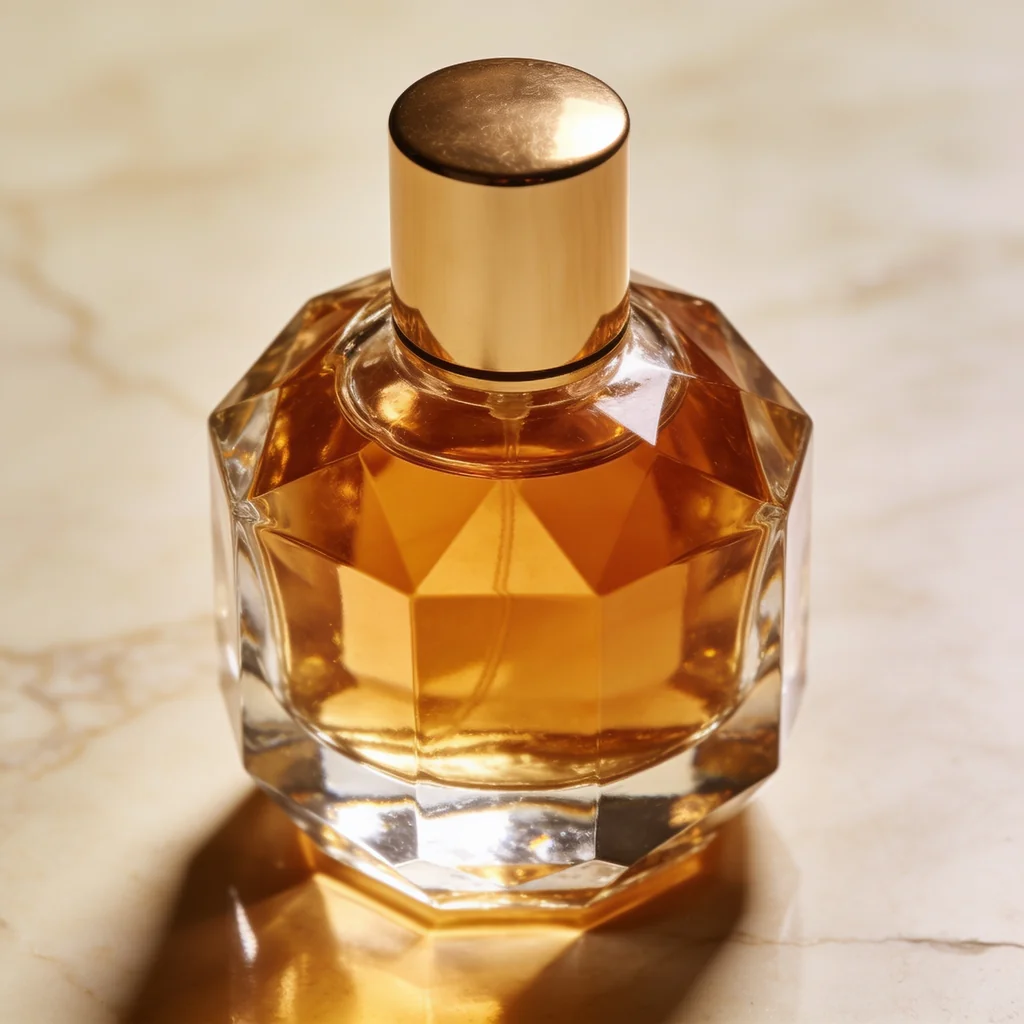
Seedream 4.5 produced a heavily faceted bottle, warm liquid, bright internal highlights, a gold-toned closure, and a soft surface caustic. The image supports an art-direction observation: its displayed refraction pattern is the most intricate of the four. It does not prove correct glass thickness, refractive index, liquid color, fill volume, closure construction, or behavior under real light.
GPT Image 2 made a restrained rectangular bottle with a clear edge, amber center, neat closure, and directional light on the stone. It is easy to inspect at article scale, but clean presentation is not product accuracy. The silhouette, proportions, base, neck, collar, cap, liquid, and reflections were not compared with an approved bottle.
Nano Banana 2 produced a centered faceted bottle with a polished cap and a controlled reflection under it. The composition reads as a finished hero, which makes it a useful review trap: a polished image can pass at thumbnail size while depicting the wrong bottle, closure, fill, artwork, and offer.
FLUX.2 Pro emphasized the light pattern, casting the brightest directional amber streak of the four displayed images. That can be an appealing art direction. It is not evidence that the bottle, liquid, stone, or studio setup would create that caustic physically.
What this comparison supports
| Question | What the four images show | What remains untested |
|---|---|---|
| Can the routes make a fragrance-bottle concept? | Yes, once each for this fictional brief. | Reliability across seeds, bottles, labels, crops, references, prompts, and current routes. |
| Do visible glass treatments differ? | Yes; facets, highlights, edge thickness, distortion, and contrast vary. | Approved geometry, glass composition, refractive index, coatings, defects, and real-light behavior. |
| Do liquid and caustic cues differ? | Yes; color, brightness, fill appearance, transmission, reflection, and light patterns vary. | Formula, concentration, exact color, opacity, fill line, volume, meniscus, and physical caustics. |
| Is a real SKU preserved? | No evidence; no product source was supplied. | Bottle, base, neck, closure, atomizer, decoration, artwork, marks, carton, inserts, dimensions, and contents. |
| Is a bottle design cleared? | No. | Search, comparison, provenance, trademark/design analysis, licensing, and counsel. |
The absence of an obvious famous wordmark is not clearance. A bottle can have protectable or distinctive trade dress in its silhouette, cap, collar, decoration, label placement, or packaging. This run did not include the comparison needed to identify or dismiss that risk.
Perfume product fidelity checklist
Build the rejection sheet from approved product photography, drawings, measurements, artwork, packaging files, and current product data:
- Flacon geometry: width, height, depth, capacity, silhouette, shoulder, base, wall, inner cavity, facets, bevels, seams, mold marks, feet, and balance.
- Glass and decoration: clear or colored glass, frosting, lacquer, gradient, texture, bubbles, emboss/deboss, screen print, hot stamp, metallization, coating, and finish boundaries.
- Liquid: approved color target, opacity, fill line, headspace, meniscus, bubbles, sediment, interaction with the glass, and intentionally visible dip tube.
- Neck and spray hardware: neck, crimp, collar, atomizer, nozzle, actuator, dip tube, threads, fit, finish, spacing, and state.
- Cap and closure: silhouette, dimensions, material, weight cues, insert, magnet or friction fit, ornament, monogram, seam, orientation, and approved open/closed state.
- Artwork and marks: brand, fragrance name, house, concentration, volume, origin, ingredients or regulatory copy, symbols, lot/batch code, barcode, recycling marks, every character, and placement.
- Carton and contents: box structure, board, color, artwork, foil, embossing, seal, cellophane, insert, booklet, samples, accessories, and sold configuration.
- Scene and optics: crop, lens feel, horizon, contact, shadow, reflection, highlight shape, distortion, background, props, color management, and transparent-edge handling.
- Product facts: name, size, concentration, notes, ingredients, allergens, longevity, origin, formulation, certification, sustainability, testing, safety, warranty, and claims stay tied to approved data.
If the image looks luxurious but the flacon, liquid, closure, artwork, carton, contents, or product facts differ, it is the wrong fragrance asset.
A source-first fragrance workflow
1. Photograph authoritative views
Capture straight front and back, both sides, three-quarter, top, base, cap off, atomizer, neck/collar, label macro, decoration macro, fill line, carton, included items, and scale. Record dimensions, approved color targets, artwork, closure state, liquid state, and current product data.
2. Build the scene separately
Generate or photograph an empty stone, mirror, water, fabric, vanity, botanical, or architectural plate at the final crop. Composite approved bottle photography, then construct contact, reflection, shadow, rim light, transmitted color, and caustics deliberately. This keeps the flacon and label deterministic.
3. Test a constrained reference edit
masonry image "Change only the environment to warm cream stone with soft camera-left studio light. Keep the supplied perfume product unchanged: flacon silhouette and dimensions, glass color and decoration, facets, base, neck, liquid color and fill line, collar, atomizer, cap, label, every character, marks, and visible packaging. Add one natural contact shadow and a subtle amber caustic. Add no props, text, claim, hand, person, or extra bottle." \ --model gemini-3.1-flash-image-preview \ --ref ./approved-perfume-front-three-quarter.png \ --aspect 1:1 \ --output perfume-scene-candidate.png
The instruction is not a product lock. Compare the candidate against every approved view; composite the approved bottle, label, or closure when exactness matters.
For a fictional concept:
masonry image "Fictional brand-free faceted clear-glass perfume flacon, amber-colored liquid, polished gold cap, cream stone, warm studio light, subtle caustic, one contact shadow, no logo, label, words, carton, flowers, claims, hand, person, or extra bottle" \ --model seedream-4-5 \ --aspect 1:1 \ --output perfume-concept.png
Perfume acceptance sheet
| Area | Pass condition |
|---|---|
| Source match | Candidate is compared with approved front, back, side, top, base, cap, atomizer, label, decoration, fill, carton, contents, dimensions, artwork, and product data. |
| Flacon and glass | Silhouette, dimensions, shoulder, base, wall, cavity, facets, bevels, seams, color, frosting, coating, decoration, edge behavior, and distortion match. |
| Liquid and closure | Liquid color, opacity, fill, headspace, meniscus, dip tube, neck, crimp, collar, atomizer, nozzle, actuator, cap, material, fit, and state match. |
| Artwork and packaging | Every character, logo, mark, label, print method, foil, carton, seal, insert, accessory, and sold item match approved files. |
| Scene and delivery | Crop, contact, shadow, reflection, transmitted color, caustic, props, background, color, dimensions, responsive crop, and format are approved. |
| Claims and rights | No material, formula, concentration, volume, performance, ingredient, allergen, origin, sustainability, safety, certification, affiliation, or clearance claim is inferred from appearance. |
Bottom line
These four outputs are useful as a glass-and-light art-direction comparison. They are not evidence that perfume optics are solved, a generated bottle is ready to list, a design is clear, or one route is always the best value.
Use fictional concepts to choose the mood. Use the approved flacon, liquid, closure, artwork, carton, and product data to decide whether an asset can ship. Compare other source-first product work in the AI product photography model review, build a controlled scene in Masonry’s product photography tool, or automate candidates with the Masonry CLI.
If the same fragrance art direction must extend across several bottles or sizes, lock camera, product occupancy, baseline, background, light, shadow, delivery, and tolerances in the AI product-photography style guide before generating the next SKU.