


Watch photography compresses reflective surfaces and precision information into one object: case, bezel, crystal, dial, chapter ring, indices, hands, sub-dials, crown, pushers, lugs, bracelet, clasp, and marks. A polished macro can still depict the wrong watch.
This test sent one fictional silver-dial steel chronograph brief through Seedream 4.5, GPT Image 2, Nano Banana 2, and FLUX.2 Pro. The four original outputs below show useful differences in metal, dial density, markings, hand stacks, sub-dials, and design invention. No real watch or approved dial was supplied.
Evidence boundary: this is one text prompt and one displayed output per model. The chronographs were fictional; no approved watch, dimensions, artwork, movement specification, time setting, packaging, or product data was supplied. The observations describe visible cues in four images—not model reliability, brand identification, trademark analysis, price/value, optical material, mechanical function, or real-SKU preservation.
Quick answer
- Crispest displayed dial markings: GPT Image 2 in this run, with readable-looking numerals and a tidy chapter structure.
- Strongest displayed metal macro: Seedream 4.5, with pronounced polish, brushing, and crystal reflections.
- Most conventional sport-chronograph concept: Nano Banana 2, with a tachymeter-style bezel, three sub-dials, and date window.
- Softest displayed sub-dial detail: FLUX.2 Pro in this run.
- What all four prove: each route made one plausible fictional watch concept.
- What none prove: preservation of a real watch, accurate complication layout, functional scales, material, movement, water resistance, brand clearance, or repeated reliability.
One output per route does not establish a universal winner. It establishes four candidates for a stricter, reference-backed watch test.
The controlled brief
The original article did not publish the exact prompt. A reproducible version matching the tested subject is:
Fictional brand-free luxury steel chronograph wristwatch, round polished and brushed case, silver sunburst dial, three sub-dials, applied hour indices, central hour/minute/chronograph hands, crown and two pushers, steel bracelet, three-quarter macro on dark slate, soft studio light with controlled reflections, square product photograph. No logo, brand name, wrist, person, box, papers, extra watch, price, claim, or watermark.
This text-only brief can test concept composition and visible watch cues. It cannot identify or preserve a SKU. The model invents every case dimension, dial scale, hand, complication, control, bracelet part, and mark not constrained by a reference.
Four first-hand outputs
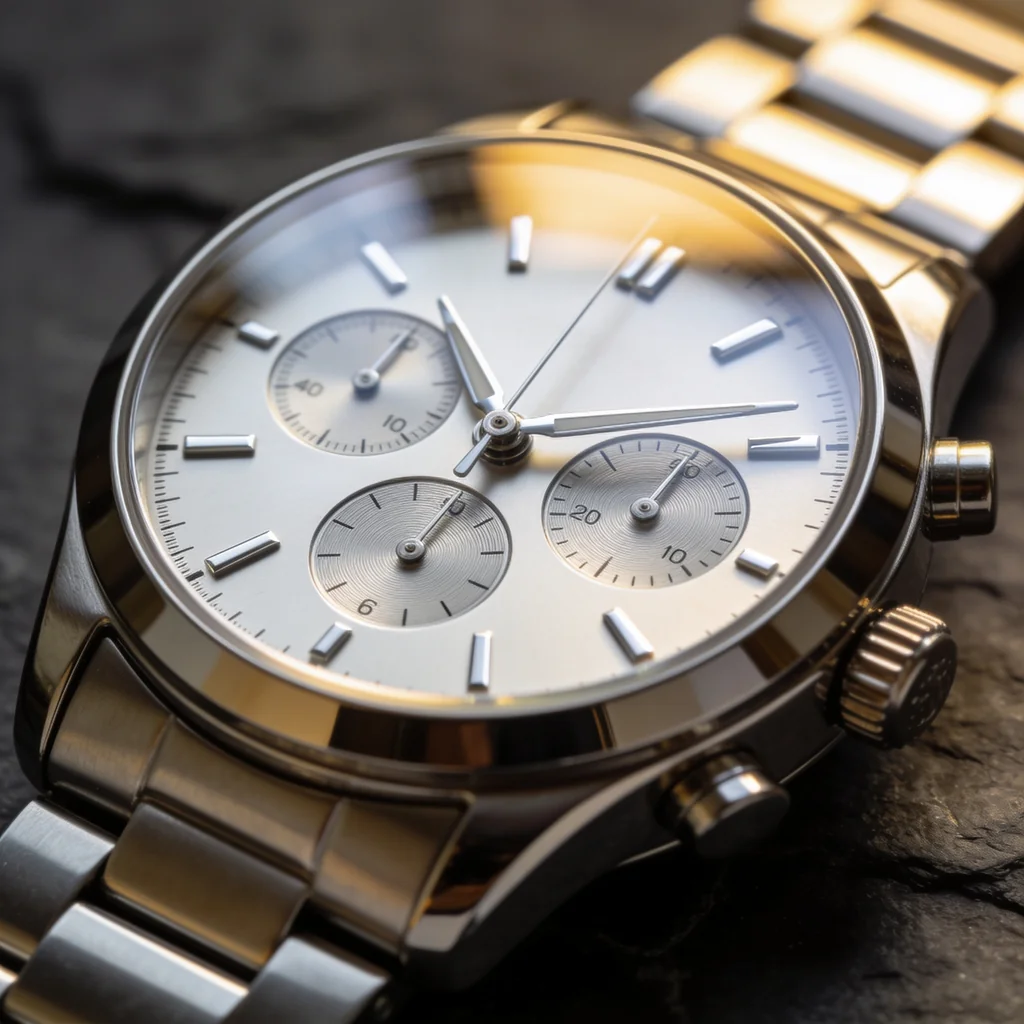
Seedream 4.5 produced pronounced polished and brushed metal, a bright sunburst dial, crystal reflections, crown detail, and a premium macro crop. The sub-dials contain scale-like markings, but the characters and intervals do not establish a coherent or functional chronograph. The central hand stack also deserves full-size inspection for count, pivot, length, and role.
GPT Image 2 made the easiest displayed dial to inspect: indices, numerals, sub-dial rings, and hand shapes appear crisp at article scale. That is evidence about this one rendered layout, not watch accuracy. A perfectly legible invented scale, wrong hand, false complication, or unapproved word still fails a real SKU.
Nano Banana 2 produced a familiar sport-chronograph vocabulary: dark tachymeter-style bezel, three registers, applied markers, date, pushers, and steel bracelet. The earlier article identified a specific luxury model and called the output a clone. This test did not preserve the source comparison, design analysis, or legal review needed for that claim. Treat it as invented concept art, not cleared product design.
FLUX.2 Pro made a plausible case-and-bracelet composition with readable overall watch structure. Its sub-dial markings are softer and less inspectable than the other displayed candidates. Even if the image is destined for a small placement, verify the full-resolution asset; hidden errors can reappear in zoom, responsive crops, or marketplace review.
What the comparison actually supports
| Question | What these four images show | What remains untested |
|---|---|---|
| Can the routes make a chronograph concept? | Yes, once each for this fictional brief. | Reliability across seeds, watches, crops, prompts, and current routes. |
| Do metal and crystal cues differ? | Yes; polish, brushing, highlights, reflections, and contrast vary visibly. | Approved alloys, coatings, crystal material, finishing, dimensions, and behavior under real light. |
| Do dial details differ? | Yes; marking crispness, density, hand stacks, indices, and sub-dials vary. | Correct artwork, scale values, functions, time, complications, lume, alignment, and repeatability. |
| Is a real SKU preserved? | No evidence; no product source was supplied. | Every case, bezel, crystal, dial, hand, control, lug, bracelet, clasp, back, mark, and dimension. |
| Is a brand or design cleared? | No. | Search, comparison, provenance, trademark/design analysis, licensing, and counsel. |
The old version declared the case solved, the dial unsolved, and permanent model winners. The defensible conclusion is narrower: all four made attractive fictional watches once, and their visible dial and material treatments differ. A real product test starts only when the approved watch is supplied.
Product fidelity checks for a real watch
Build the rejection sheet from approved photography, drawings, measurements, dial artwork, movement and complication specifications, packaging, and product data:
- Case and bezel: diameter, thickness, profile, shape, facets, polish/brushing boundaries, bezel type, scale, insert, screws, guards, caseband, and finish.
- Crystal and dial opening: crystal shape, height, edge, distortion and reflection cues, rehaut, chapter ring, flange, dial diameter, depth, and alignment.
- Dial artwork: color, sunburst or texture, logo, model line, origin, depth rating, movement or certification text, every character, printing, applied elements, and placement.
- Indices and lume: count, shape, length, orientation, minute track, alignment, material cues, lume plots, color, and approved performance language.
- Hands and time: hour, minute, seconds, chronograph, GMT, reserve, sub-dial and other hands; lengths, shapes, lume, pivots, stacking order, positions, and intended displayed time.
- Sub-dials and complications: count, diameter, position, scale, labels, numerals, hand, function, date/day/month/moonphase/window, and relationship to the actual movement.
- Crown and pushers: side, count, diameter, guards, knurling, logos, screw-down cues, actuator shape, spacing, and state.
- Lugs, strap, and bracelet: lug shape and width, end links, link count and profile, finishing, pins/screws, taper, strap material and stitching, buckle/clasp, micro-adjust, and marks.
- Caseback and marks: display or solid back, movement view, rotor, screws, engravings, serial/model numbers, hallmarks, water-resistance copy, stickers, and protective film.
- Sold configuration: exact size, metal, finish, dial color, strap/bracelet, clasp, packaging, papers, tools, spare links, warranty, and included items.
- Product facts: material, sapphire, coating, movement, jewels, power reserve, accuracy, complications, lume, water resistance, pressure, shock/magnetic resistance, origin, certification, warranty, and safety remain in approved data and tests.
If the macro looks premium but the bezel, crystal, dial, scale, hand, complication, pusher, lug, link, clasp, mark, size, or included item differs, it is the wrong watch.
A reference-first watch workflow
1. Prepare authoritative sources
Use straight front, three-quarter, both sides, crown/pushers, top, underside, caseback, dial macro, crystal edge, lugs, bracelet, clasp, marks, packaging, papers, included-item, and scale views. Add dimensions, dial artwork, time setting, movement/complication map, color targets, and current product data.
2. Generate the scene separately
Create an empty slate, leather, wood, mirrored, wrist-adjacent, or editorial plate at the final crop. Composite approved watch photography, then construct contact, shadow, and reflections deliberately. For reflective cases and crystals, this is often safer than asking a model to preserve the object.
3. Test a constrained reference edit
masonry image "Change only the environment to dark slate with soft camera-left studio light and controlled reflections. Keep the supplied watch unchanged: case, bezel, crystal, dial, chapter ring, indices, lume, every hand and position, sub-dials, date, crown, pushers, lugs, bracelet, clasp, finishing boundaries, marks, and every visible character. Add one natural contact shadow. Add no wrist, box, papers, text, logo, or extra watch." \ --model gemini-3.1-flash-image-preview \ --ref ./approved-watch-three-quarter.png \ --aspect 1:1 \ --output watch-scene-candidate.png
The instruction is not a watch lock. Compare the candidate with every approved source and composite the approved watch or dial when exact geometry, artwork, reflection, or function matters.
For a fictional concept:
masonry image "Fictional brand-free steel chronograph wristwatch, round case, silver sunburst dial, three sub-dials, applied indices, crown and two pushers, steel bracelet, three-quarter macro on dark slate, soft studio light, controlled reflections, no text, logos, wrist, box, papers, or extra watch" \ --model seedream-4-5 \ --aspect 1:1 \ --output watch-concept.png
Watch acceptance sheet
| Area | Pass condition |
|---|---|
| Source match | Candidate is compared with approved case, bezel, crystal, dial, side, caseback, bracelet, clasp, marks, packaging, dimensions, and product data. |
| Case and crystal | Dimensions, profile, finishing, bezel, guards, crystal, reflections, distortion cues, rehaut, and contact match. |
| Dial and hands | Artwork, every character, indices, lume, tracks, all hands, stacking, positions, date, sub-dials, scales, and complications match. |
| Controls and attachment | Crown, pushers, lugs, end links, bracelet/strap, clasp, hardware, finishing, and marks match. |
| Sold configuration | Size, metal, finish, dial, strap/bracelet, clasp, box, papers, tools, links, warranty, and included items match the offer. |
| Product facts | No material, crystal, movement, accuracy, power, complication, lume, resistance, origin, certification, warranty, or safety fact is inferred from the image. |
| Rights review | No logo, mark, product design, artwork, or packaging is treated as cleared merely because a model produced it. |
Bottom line
These four original outputs are useful as a dial-and-material concept comparison. They are not evidence that any route preserved a watch, built a functional chronograph, identified a brand, or cleared a design.
Use the images to choose an art direction. Use approved case, dial, movement, bracelet, marks, packaging, and product data to decide whether an asset can ship. Compare other controlled product work in the AI product photography model review, or build a source-first scene in Masonry’s product photography tool and automate candidates with the Masonry CLI.


