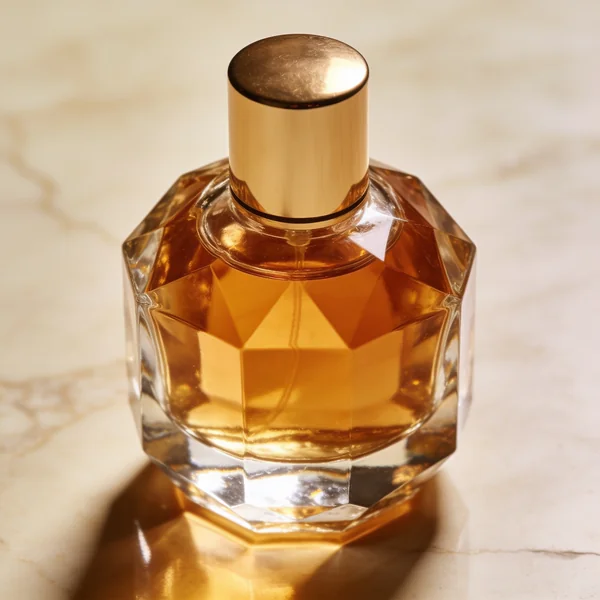
Skincare photography compresses several fragile details into one small object: a bottle or jar profile, glass or plastic finish, cap or dropper geometry, fill and formula color, tiny label artwork, carton, and product claims. A polished result can still be the wrong SKU.
This test sent one fictional frosted-glass serum brief through Nano Banana 2, GPT Image 2, Seedream 4.5, and FLUX.2 Pro. The four original outputs below reveal useful differences in composition, displayed copy, glass cues, reflections, and scene invention. No real bottle or approved label was supplied.
Evidence boundary: this is one text prompt and one displayed output per model. The bottle and AURELIA brand were fictional; no real SKU, artwork file, formula, measurement set, packaging, or product data was supplied. The observations describe visible pixels, not reliability rates, conversion results, regulatory review, or proof that a route preserves real skincare products.
Quick answer
- Most readable displayed copy in this run: GPT Image 2, but it also invented product-line and fine-print copy that the brief did not request.
- Most restrained requested label treatment: Nano Banana 2 kept the requested brand plus a short secondary line, though that line was also not specified verbatim.
- Strongest displayed editorial scene: Seedream 4.5 made the most dramatic wet-surface and eucalyptus composition while simplifying the label.
- Clear label failure: FLUX.2 Pro malformed the requested AURELIA letterforms.
- What all four prove: each route made one plausible fictional skincare concept.
- What none prove: preservation of a real bottle, closure, formula, label, carton, claim, color, dimension, or sold configuration.
The controlled brief
The earlier article summarized rather than published the prompt. A reproducible version matching the tested subject is:
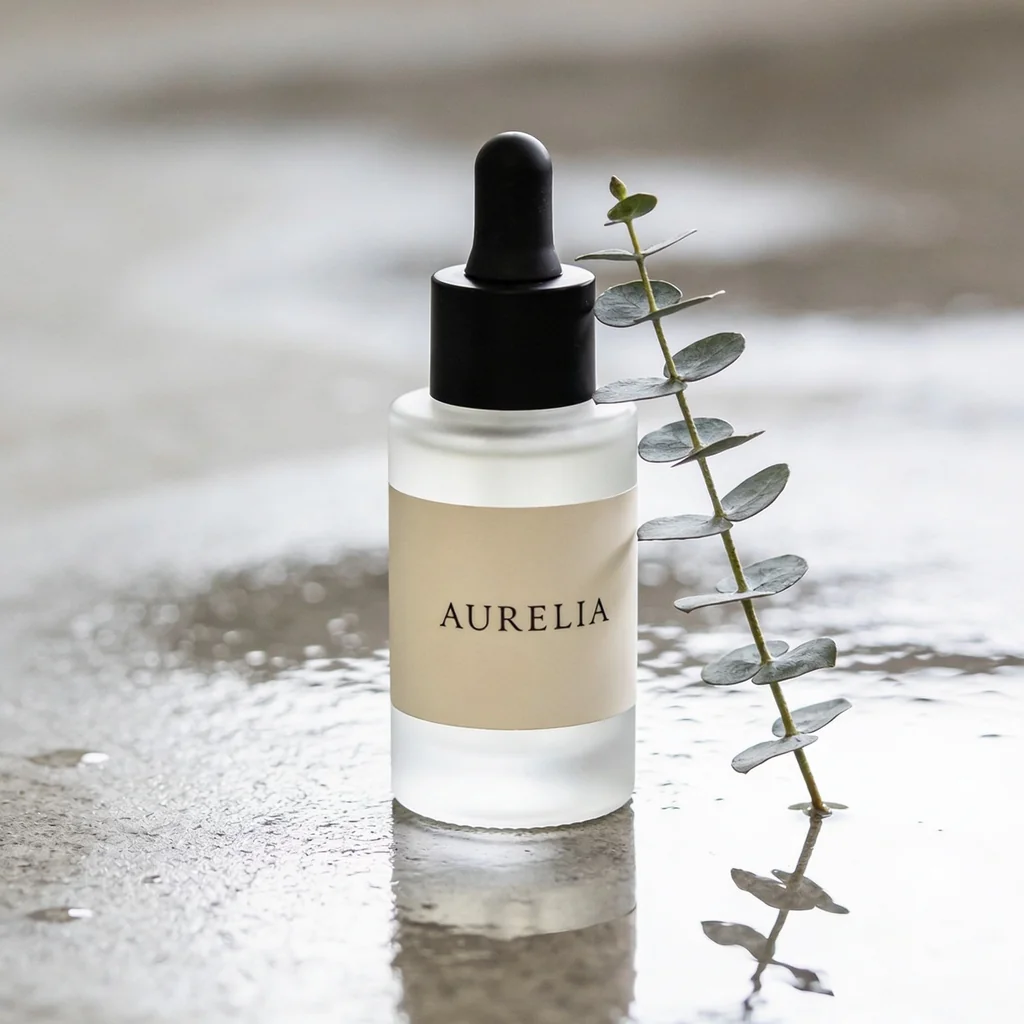
Fictional frosted-glass skincare serum dropper bottle labeled “AURELIA,” upright on wet concrete beside one eucalyptus sprig, soft diffused studio light, visible contact shadow and surface reflection, premium restrained beauty editorial, square product photograph. No person, hands, extra bottle, carton, badges, prices, claims, or watermark.
Only “AURELIA” is approved copy in this fictional brief. Any product name, ingredient, concentration, volume, benefit, or fine print beyond it is invented—even if spelled perfectly.
Four first-hand outputs
Nano Banana 2 produced a centered bottle with plausible frosted-glass, matte closure, contact, and reflection cues. “AURELIA” is readable. A secondary line also appears; because the brief did not specify it, readability does not make it correct. There is no source bottle against which to judge profile, finish, closure, fill, or color.
GPT Image 2 rendered the densest readable label hierarchy. That is useful evidence about this displayed text-layout attempt, not evidence that the model kept an approved label. The extra product line and fine print were inventions. On a real cosmetic SKU, one unapproved word, unit, claim, or ingredient is a rejection.
Seedream 4.5 produced the most pronounced beauty-editorial treatment: diffuse frost, shallow depth, eucalyptus, and a reflected wet surface. It kept the requested brand visible and did not show the same density of invented small copy. The model still invented the bottle, closure, formula appearance, exact label design, and scene.
FLUX.2 Pro created a plausible warm editorial composition, but the brand letterforms are visibly malformed. That is a direct failure against the one explicit text requirement. It should not advance to listing use simply because the bottle, droplets, and background look attractive.
What the comparison actually supports
| Question | What these four images show | What remains untested |
|---|---|---|
| Can the routes make a serum concept? | Yes, once each for this fictional brief. | Reliability across seeds, bottles, crops, prompts, and current routes. |
| Can displayed copy look readable? | Yes; readability and density vary. | Exact approved artwork, every character, repeatability, and behavior at final output size. |
| Did readable text equal fidelity? | No; GPT Image 2 added readable copy that was never supplied. | Preservation of real brand, product, ingredient, warning, unit, and compliance copy. |
| Did the glass and dropper match a SKU? | No evidence; no source product existed. | Container profile, finish, neck, closure, pipette, fill, formula, dimensions, and color. |
| Are product claims supported? | No. | Every ingredient, concentration, volume, performance, safety, compliance, and certification fact. |
The original article treated extra legible copy as a label-fidelity win and plausible glass as proof the hard problem was solved. The more useful conclusion is that legibility and material plausibility can be inspected in these four outputs, while product fidelity cannot be judged without a product source.
Product fidelity checks for real skincare
Build the rejection sheet from approved packshots, artwork, measurements, packaging, formula references, color targets, and product data:
- Primary container: bottle, jar, tube, ampoule, sachet, or stick profile; shoulder, neck, opening, base, wall thickness, facets, seams, paneling, dimensions, and fill capacity.
- Closure and dispensing: cap, collar, thread, pump, actuator, nozzle, overcap, dropper bulb, pipette, wiper, spatula, seal, tamper evidence, and open/closed configuration.
- Material and finish: glass or plastic cues, frost, transparency, tint, coating, metallization, gloss, matte, soft touch, translucency, edge treatment, scratches, and approved material language.
- Formula and fill: fill line, serum or cream color, opacity, viscosity cues, bubbles, separation, suspended particles, and the relationship between formula, container, pipette, and surface.
- Label and print: brand, product name, variant, ingredient or active line, concentration, net contents, units, directions, warnings, symbols, batch/lot cues, barcode, embossing, foil, varnish, and every visible character.
- Secondary packaging: carton dimensions, dieline, color, finish, artwork hierarchy, seals, inserts, trays, leaflets, codes, and how the container sits inside.
- Sold configuration: quantity, size, shade, fragrance, cap, applicator, carton, seal, accessory, set components, samples, and included items must match the offer.
- Product facts: ingredients, concentration, volume, SPF, hydration, treatment, clinical, dermatologist-tested, hypoallergenic, cruelty-free, vegan, sustainability, safety, compliance, and performance remain in approved data and substantiation.
If the scene looks premium but the pump, pipette, fill, label, carton, shade, size, or included item differs, it is the wrong SKU.
A reference-first skincare workflow
1. Prepare authoritative sources
Use straight front, three-quarter, side, top, underside, open, closure, dispensing, fill, label, back-label, carton, seal, included-item, and scale views. Add measurements, artwork, color targets, formula reference, and current product data. Name each source’s role.
2. Generate the environment separately
Create an empty vanity, wet-stone, clinical, botanical, or ingredient-adjacent scene at the final crop. Composite approved product photography, then construct contact shadow and reflection deliberately. This keeps the scene generative and the product deterministic.
3. Test a constrained reference edit
masonry image "Change only the environment to wet pale concrete with one eucalyptus sprig and soft camera-left studio light. Keep the supplied serum unchanged: bottle profile, shoulder, neck, base, frost, fill, formula color, cap, collar, bulb, pipette, label placement, artwork, and every visible character. Add one natural contact shadow and restrained surface reflection. Add no carton, claims, badges, text, hands, or extra products." \ --model gemini-3.1-flash-image-preview \ --ref ./approved-serum-three-quarter.png \ --aspect 1:1 \ --output serum-scene-candidate.png
The instruction is not a bottle or label lock. Compare the result with every approved source. Composite the approved packshot and artwork when exact geometry or copy matters.
For a fictional concept:
masonry image "Fictional brand-free frosted-glass serum dropper bottle on wet concrete beside one eucalyptus sprig, soft diffused studio light, visible contact shadow, restrained reflection, premium beauty editorial, no text, claims, badges, hands, carton, or extra bottles" \ --model seedream-4-5 \ --aspect 1:1 \ --output serum-concept.png
4. Proof the final at full size
Use overlays or flicker comparison for container and closure geometry. Inspect frost, fill, formula, refraction, artwork, every character, carton, seal, and included items. Keep approved claims outside the generative review.
Skincare acceptance sheet
| Area | Pass condition |
|---|---|
| Source match | Candidate is compared with approved container, closure, formula, label, carton, seal, included-item, measurement, and color sources. |
| Container and closure | Profile, dimensions, shoulder, neck, base, material, finish, cap, pump/dropper, pipette, seams, and open/closed state match. |
| Formula and fill | Fill line, color, opacity, viscosity cues, particles, bubbles, and interaction with the package match approved sources. |
| Artwork and print | Every approved character, symbol, unit, warning, code, foil, emboss, varnish, and placement matches; no invented copy appears. |
| Packaging and set | Carton, seal, insert, tray, leaflet, size, variant, quantity, accessory, samples, and included items match the offer. |
| Product facts | No ingredient, concentration, volume, SPF, performance, clinical, safety, compliance, or certification fact is inferred from the image. |
Bottom line
The four original visuals are valuable because they expose the difference between a plausible skincare concept and an approved SKU. The sharpest lesson is not that one model “wins” text: readable invented copy is still wrong.
Use the outputs to choose an art direction. Use approved container, closure, formula, artwork, packaging, and product data to decide whether an asset can ship. Compare other controlled work in the AI product photography model review, apply the trust test in Do AI product photos hurt sales?, or build a source-first workflow in Masonry’s skincare photography studio.